Retaining wall construction in College Station TX - level ground that stays put
Soil creeping off a slope or an old timber wall leaning out? We build block and poured concrete walls that hold your yard level.
- Licensed and insured.
- Free in-person estimates.
- We reply within 1 business day.
What goes into building a retaining wall in College Station?
Retaining wall construction in College Station means building a wall of concrete block, poured concrete or treated timber that holds the earth on your lot in place, so a slope becomes level ground you can use. We build in block and poured concrete, and we build to an engineer's sealed design.
Most folks call us because a slope keeps moving, with dirt sliding onto a patio or a walkway, or an old tie wall tipping forward, or they just want flat ground they can actually use. The price moves with the kind of wall, how tall and long it runs, how complex the design is, where it sits on the lot and how easy it is to reach, and how much else the job takes on. The schedule usually turns on the engineer's design and the city's permit, since those come before we dig, more than on the build itself. When I come out, you get a written estimate that spells out the work and materials for your wall.
How do you know your yard needs a retaining wall?
Dirt creeping onto the patio
If soil keeps slumping off a bank onto your patio, walk or lawn after every hard rain, the slope is too steep to hold itself up. Each storm takes a little more, and the longer it goes, the more there is to dig out and haul off before a wall can go in.
Old timber wall leaning out
Landscape timbers or railroad ties that look soft, split or tipped forward usually mean the wood is rotting at the bottom. Once that starts, the wall leans a bit more each season, and when it finally lets go it can bring the slope behind it down too.
A fence holding back dirt
Fence boards bowing out with soil piled against them mean the fence is doing a wall's job, and it wasn't built for that. The posts usually give before long, and then you're paying for a new fence and the wall you needed in the first place.
How we handle retaining wall construction
I start by looking at the slope with you and talking through block versus poured concrete, because they cost different amounts and look different, and I want the wall to fit your budget. Then we get the engineer's sealed design in hand before anything else, since a wall is only as good as the plan it's built to. We make sure the 8-1-1 call goes in a few days before we dig so buried utility lines get marked. After that our crew digs out, sets the base, builds the wall one row at a time to the design, backfills behind it and cleans up.
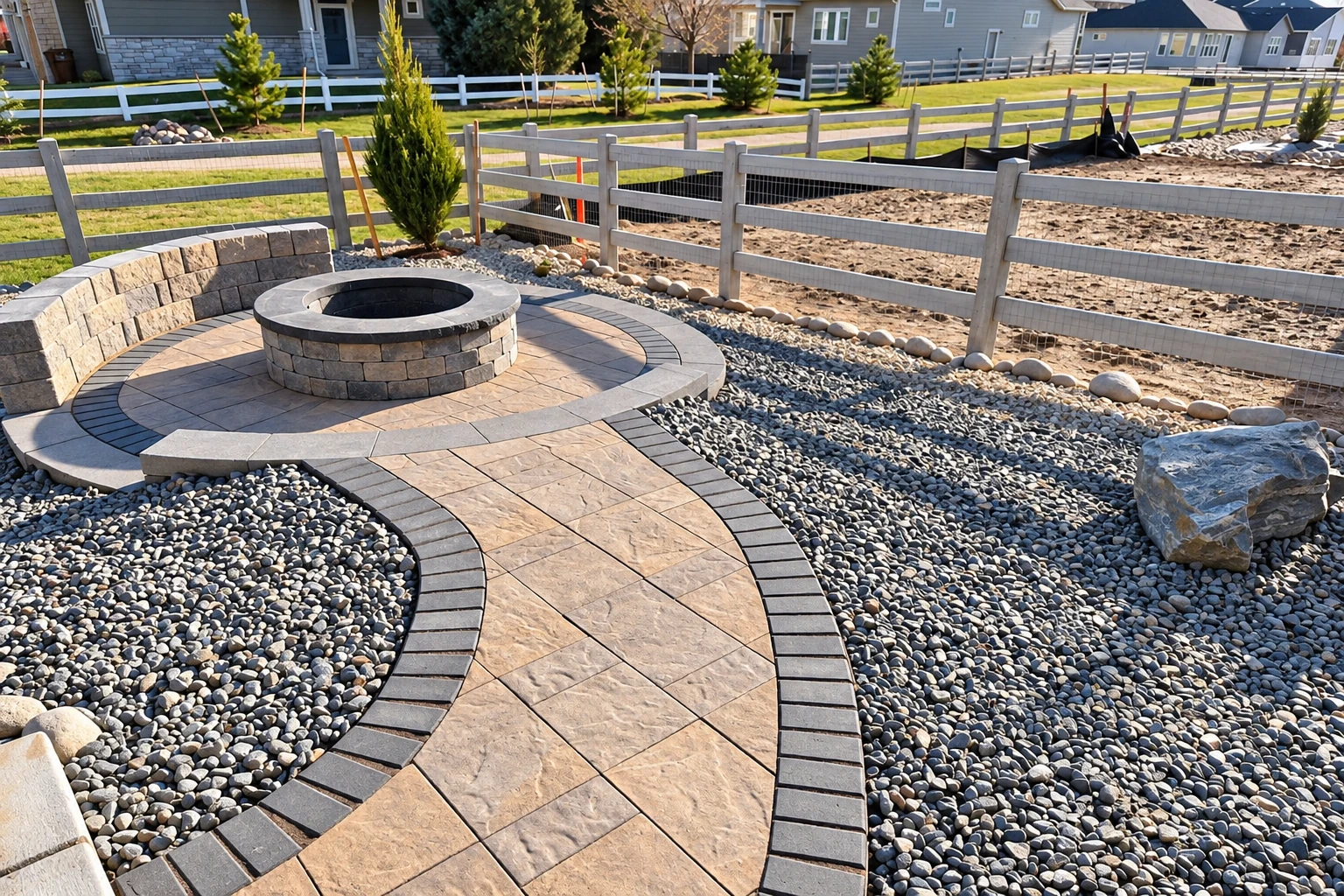
Not every slope needs a new wall. If you've got an older brick or stone wall that's sound underneath and just worn on the face, masonry restoration may be the better fix, and I'd rather tell you that than sell you a rebuild. And once the yard is level, plenty of folks want a spot to sit by a fire, which our fireplace installation work can put right on that new flat ground.
Segmental block wall
Interlocking concrete blocks stacked without mortar to the engineer's design, which suits most backyard slopes. On a set budget it's the one I usually point people to, since block tends to stretch the money further.
Poured concrete wall
Concrete poured into forms right on site, a good pick for a tight spot or when you want a smooth, plain face. It usually costs more than block, so I'd choose it when the site or the look calls for it, not by default.
Get your retaining wall priced on site, in writing
Send the form and we'll reply within one business day to set a time for me to come see the slope. The estimate is free, done at your house, and comes with no obligation.
(979) 393-7020Retaining wall rules in College Station
The city's retaining wall rules require a permit to install a retaining wall over two feet tall, and they require retaining walls to be designed by a Professional Engineer, with plans signed and sealed by an engineer registered in Texas. Whoever builds the wall has to be registered with the city too. Before we start, I find out what the city asks for on your wall, and when the permit is ours to pull, we pull it and set up the inspections. If you'd rather pull it yourself on your own home, we'll tell you what the city will want to see.
Under the city's lot grading rules, a retaining wall is allowed case by case with the Development Engineer's approval, based on lot grading a licensed Professional Engineer has prepared, and a fence can't be used as a retaining wall at all. So if dirt is piled against your fence, the fix is a real wall, not stronger posts. We see the same sloping backyards and tired tie walls on jobs in Bryan and Navasota, and we check each city's rules there the same way.
What happens after you call about a retaining wall?
Call or send the form
Call (979) 393-7020 or fill out the form, and we'll set a time for me to come by. We pick up the phone seven days a week, early morning to evening.
Walk the slope with me
I come out myself, look it over with you and talk through what the wall needs and whether block or poured concrete fits your budget. You get a written estimate that spells out the work and the materials, so you can see where the money goes before you decide.
Line up design and permit
We sort out the city side before anyone starts, with the engineer's sealed plans in hand first and the permit after them. Nobody breaks ground until both are settled.
Build, inspect and walk it
Our crew builds the wall while I check it as it goes, and the city does its final inspection once the work is complete. Then we walk it together and leave your yard clean.
Frequently asked questions
How much does a retaining wall cost in College Station?
Hiring a contractor to build a poured concrete retaining wall usually costs about $30 to $50 per square foot across the US. That's a national figure for poured concrete only, not a College Station quote, and block is priced differently. Your written estimate gives you the number for your own wall in the material you pick.
Is a block retaining wall cheaper than poured concrete?
Usually, yes. The block industry's design manual says segmental block walls typically come in 25 to 40 percent cheaper than cast-in-place concrete walls. If you're working with a set budget, that's often the deciding point.
Who has to design a retaining wall in College Station?
A Professional Engineer licensed in Texas, since the city wants signed and sealed plans before the wall goes up. It's fair to ask the engineer for their Texas license when the plans are drawn. Engineers here are licensed through the Texas Board of Professional Engineers and Land Surveyors.
How long does it take to build a retaining wall?
The wall itself usually goes up fast. The block industry's manual says an experienced crew of three or four typically puts up 300 to 500 square feet of wall a day. The engineer's design and the permit come first, so they tend to set your start date more than the build does.
Do block retaining walls last longer than timber ones?
Block usually holds up better. The block industry's manual says block units resist cracking and don't splinter or rot the way treated timbers and railroad ties do. If your old tie wall is going soft, that's why I'd talk block or concrete for the replacement.
Can I build a retaining wall near a creek in College Station?
Maybe not right along it. Counties and cities can set buffers or easements, protected strips of land along creeks, and retaining walls typically aren't permitted inside them. If your yard backs up to a creek, tell me early so the engineer and the city can sort out where the wall can go.
College Station, TX
Let's plan your new retaining wall
Have the wall's rough height, length and spot on the lot in mind when you call, and we can talk real options from the first conversation.